

Support your immunity with Vitamin D.
More Recipes



Muscle Health
Keeps soreness at bay.

What is Sarcopenia?
Sarcopenia is one of the diseases associated with the ageing process. It is the progressive loss of muscle mass and strength.
Who will be affected?
It affects adults above the age of 40 years and their ability to perform daily activities such as climbing stairs or lifting objects, leading to poor quality of life. The risks of fall and fracture incidences are also increased.
What are the causes?
Sarcopenia is caused by a multitude of factors such as inadequate nutrition, low physical activity level and a secondary effect from diseases and hormonal changes.
- Ageing- Age-associated muscle loss
- Disease- Inflammatory conditions (e.g. organ failure, malignancy), Osteoarthritis, Neurological disorders
- Inactivity- Sedentary behaviour (e.g. limited mobility or bedrest), physical inactivity
- Malnutrition- Under-nutrition or malabsorption, medication-related anorexia, over-nutrition/obesity
What are the symptoms?
The symptoms are feelings of weakness, losing balance easily, which is why the fall risks and fracture incidences are higher in that age group. They also find it hard to climb stairs or lift objects. It is an overall loss of strength. An ongoing study found that 25% of older adults aged between 50 and 99 years in Singapore were Sarcopenic and at a higher risk of malnutrition.

Prevention
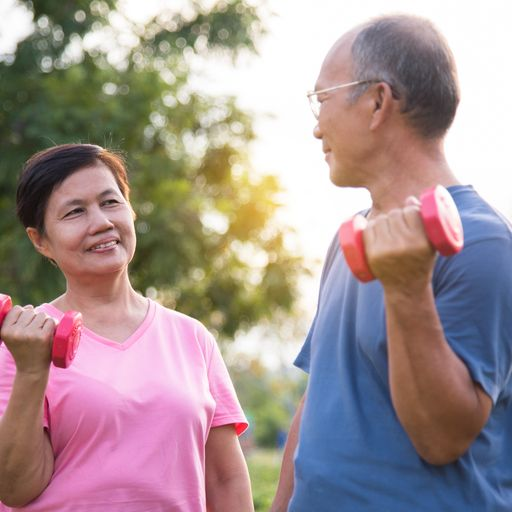
Regular resistance exercise and a balanced diet with a good amount of protein will help reduce the loss of muscle mass. Protein has shown to be a crucial factor in muscle maintenance and growth. Ageing is associated with changes in muscle protein metabolism, where hormonal changes can also lower protein synthesis. Hence it is vital to supplement our diet with high quality protein, which encourages muscle growth before and during ageing.
Requirements of an Elderly person
To help prevent Sarcopenia, an elderly person 60kg needs about 60g protein per day. Epidemiological studies suggested that a low protein intake is associated with sarcopenia. As optimal dietary protein intake, daily 1.0 - 1.2g/kg with an optimal repartition over each daily meal or 25 - 30g of high quality protein per meal were recommended to prevent sarcopenia, which was supported by some observational studies. Cheese and milk protein, EAA, leucine, HMB and vitamin D have been investigated as a potential supplement to improve muscle quality in sarcopenic elderly people(1). A daily protein intake of 1g per kg body weight has been identified as the minimum amount required to maintain muscle mass in old age, at least in women.(2) 2 glasses of MARIGOLD HL Milk would provide 20g of protein and 1000mg of calcium, meeting 30% of their protein and 100% of their calcium needs.
MARIGOLD HL Milk as a Good Source of Protein and Calcium
Muscles need a regular intake of protein and exercise to be maintained. Studies have shown that just 10g milk protein per day can help to increase muscle mass and strength. This can delay Sarcopenia and help minimize the rate of muscle loss. Calcium is also important for seniors and older adults as it supports bone health and helps minimize the adverse effects of falls. With sufficient intake of protein and calcium in your diet, you could maintain muscle mass and slow the rate of bone loss, ensuring your quality of life remains the same(3). 1 glass (250ml) of MARIGOLD HL Milk contains 10g of protein and 500mg of calcium.
Ways to Incorporate MARIGOLD HL Milk into their daily diet
The elderly tend to have a smaller appetite and eat less protein than they should. They are less likely to eat large portions at main meals; therefore nutritious snacks are essential for them. By adding or switching up certain foods each meal to include more protein-rich ones, it is easy to spread out your protein intake for a steady supply of protein for muscles to repair and/or build new cells and tissues throughout the day(4). 1 glass (250ml) of MARIGOLD HL Milk provides 10g of high quality protein, it is tasty and delicious and can be easily incorporated into an elderly person’s diet. It can also be made into custards or mixed with their morning cereal or oats.
- (1) Yanai. H. (2015, October 23). Nutrition for Sarcopenia. Journal of Clinical Medicine Research, 7(12), p926-931. doi: 10.14740/jocmr2361w
- (2) Calvani. R., Miccheli. A., Landi. F., Bossola. M., Cesari. M., Leeuwenburgh. C., Marzett. E. (2013). Current nutritional recommendations and novel dietary strategies to manage sarcopenia. The Journal of Frailty & Aging, 2 (1), p38-53.
- (3),(4) https://www.healthhub.sg/live-healthy/2076/seniors-need-more-protein